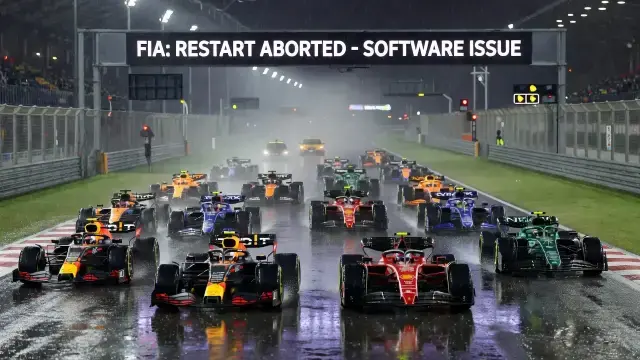
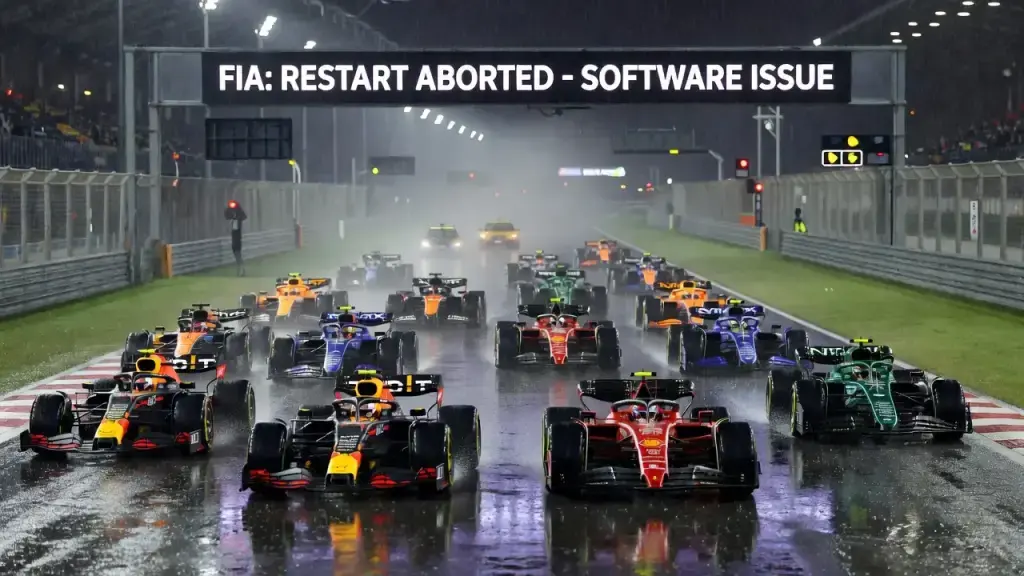
Formula 1's return to Sepang after an eight-year absence turned into a case study in chaos on Sunday, as a software bug supplied by the FIA caused multiple cars to lose power simultaneously behind the safety car, delaying the Bahrain Grand Prix start by more than 90 minutes. Drivers from across the grid did not hold back afterward, branding the episode "horrible," "sad" and "totally unacceptable" as the sport scrambled to explain what went wrong.
Heavy rain soaked the grid before lights out, pushing the original start back by 40 minutes while teams and race control assessed conditions. For fans following along on platforms built for tracking live motorsport action, such as the 366 game companion many enthusiasts use to stay across session timing, the delay alone was a frustrating watch. Worse followed when the cars, led by pole-sitter Max Verstappen, had not even completed a single lap behind the safety car before engines began cutting out across the field.
A Glitch With No Simple Fix
Verstappen was the first to lose power, with Lewis Hamilton stalling his Ferrari alongside him on the front row and having to restart the power unit mid-pit straight. The FIA later attributed the failure to "an unprecedented combination of low engine speed, low-grip conditions, wet-weather energy management settings and the Sepang circuit's sector configuration." All cars were sent back to the pits so a software patch could be uploaded by every team, a process that pushed the race start past the 90-minute mark beyond schedule.
Drivers Point to Overcomplicated Regulations
Reigning champion Lando Norris called the situation "horrible" and said it exposed the risks of leaning too heavily on electronic systems. Aston Martin's Lance Stroll lamented missing out on genuine wet-weather racing "to fix software issues," while Cadillac's Sergio Pérez described the entire sequence as "totally unacceptable for the sport." Verstappen, who went on to win the race, argued the root cause lies in power unit regulations designed so nearly half the car's output comes from the battery, calling the systems "so complicated" that glitches become almost inevitable. Hamilton compared the farcical scene - cars running side by side at reduced, matched speeds - to Lego's go-kart exhibition race at Silverstone, a comparison Verstappen agreed with. Kimi Antonelli, who finished second, said drivers were "five-wide in the straight" without understanding what was happening.
Calls for the Sport to Reassess
Williams driver Carlos Sainz was among the most pointed in his criticism, urging F1 to "have a hard look at themselves" and questioning who signed off on the current power unit direction years ago. "It is clear the regs are extremely complicated for the drivers, for the teams, for the manufacturers," he said, adding that the FIA and F1 were doing their best with a framework he believes was flawed from the start. George Russell, who retired late with a power unit issue, said fans attending Malaysia's first grand prix since 2017 deserved better than a day dominated by delays, a red flag and extended safety car periods. "That wasn't good," he said, summing up a mood shared widely in the paddock.