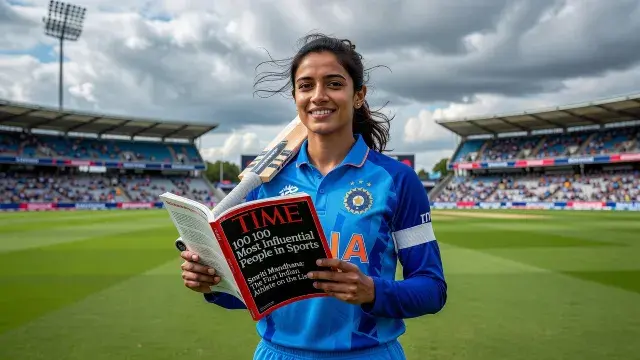
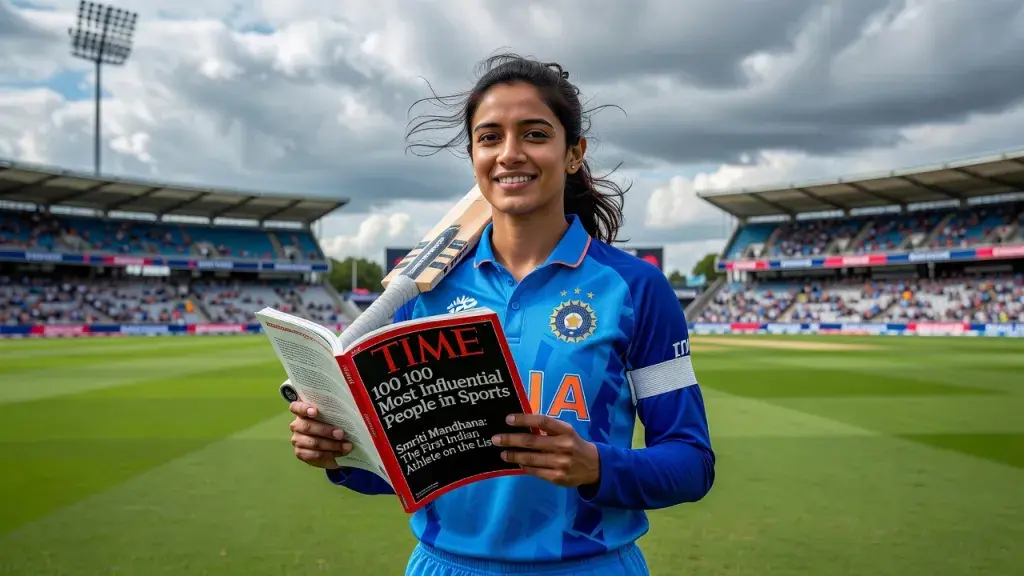
Smriti Mandhana has become the first Indian athlete ever to feature on TIME magazine's 100 Most Influential People in Sports list, with the women's team vice-captain earning global recognition for her impact both on the field and in the broader landscape of professional sport in India. The announcement, which arrived during the ongoing ICC Women's T20 World Cup in England, carries particular weight - not least because cricket heavyweights Virat Kohli, Rohit Sharma, and current Test and ODI captain Shubman Gill were all absent from the list. Mandhana stands alone as India's sole representative, and that distinction speaks volumes.
Why TIME Took Notice
TIME's citation centred on Mandhana's leadership of Royal Challengers Bangalore in the Women's Premier League, where she has captained the side to WPL titles in both 2024 and 2026. The magazine pointed to the commercial and cultural ripple effect of that success - surging television viewership, growing grassroots participation, and a shift in how professional women's cricket is perceived and consumed across India. Just as competitive ecosystems in other entertainment formats, from esports tournaments like the rift legends spring to major athletics events, have drawn new audiences by showcasing elite competition in accessible formats, the WPL under Mandhana's stewardship has demonstrated that women's sport in India can attract and sustain a mainstream following on its own merits. TIME also recognised her broader social influence - a role model for young girls across the country who aspire to careers in professional sport, a rare crossover figure who commands respect beyond cricket circles.
The list places her alongside some of the most recognisable names in world sport: tennis great Novak Djokovic, reigning Formula One champion Max Verstappen, French rugby icon Antoine Dupont, sprint stars Sydney McLaughlin-Levrone and Noah Lyles, and footballers Aitana Bonmati and Lauren James. It is a roster assembled on the basis of global influence, and Mandhana's inclusion in that company is a marker of how far Indian women's cricket has travelled.
Form Doubts Silenced at Edgbaston
The timing of the recognition was not without a degree of pressure. Mandhana arrived at the World Cup under scrutiny - a lean run of form through India's preparatory WT20I series and warm-up fixtures in England had raised legitimate questions about her touch at the top of the order. Those concerns dissolved quickly once the tournament began in earnest.
Against Pakistan at Edgbaston, in a group-stage fixture that always carries its own weight regardless of context, India found themselves wobbling early with top-order wickets falling cheaply. Mandhana arrested the slide with authority, striking 68 off 44 deliveries - an innings built on nine fours and two sixes that blended aggression with responsibility. India posted 170 for 6, and their bowlers did the rest, completing a 64-run victory that announced their World Cup intentions clearly. It was exactly the kind of high-pressure response that separates established match-winners from the rest of the field.
A Landmark Moment for Indian Women's Cricket
What makes Mandhana's TIME recognition genuinely significant is its context. Indian cricket has long been defined in global conversation by its men's game, and while the women's team has grown steadily in stature over the past decade, external validation of this kind - from a publication of TIME's reach and standing - reflects a structural shift rather than a courtesy nod. The WPL's rapid rise as a credible franchise competition, the expanding broadcast footprint of women's international cricket, and India's consistent presence in the later stages of major ICC events have all contributed to an environment where a Smriti Mandhana can be measured against the most influential sporting figures on the planet and belong in that conversation. The first name on that list from India being a woman, and a cricketer, is a detail that will not be lost on the generation of players that follows her.