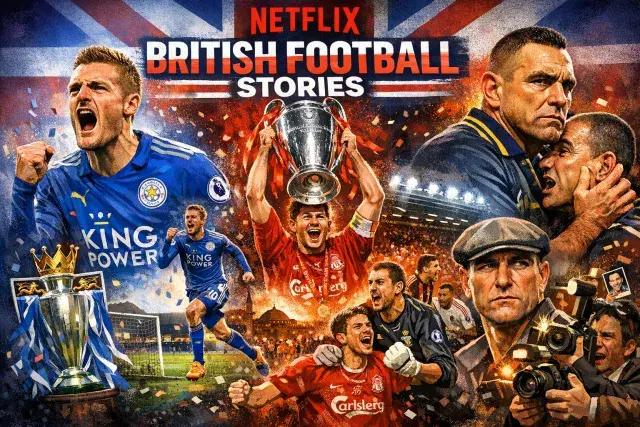
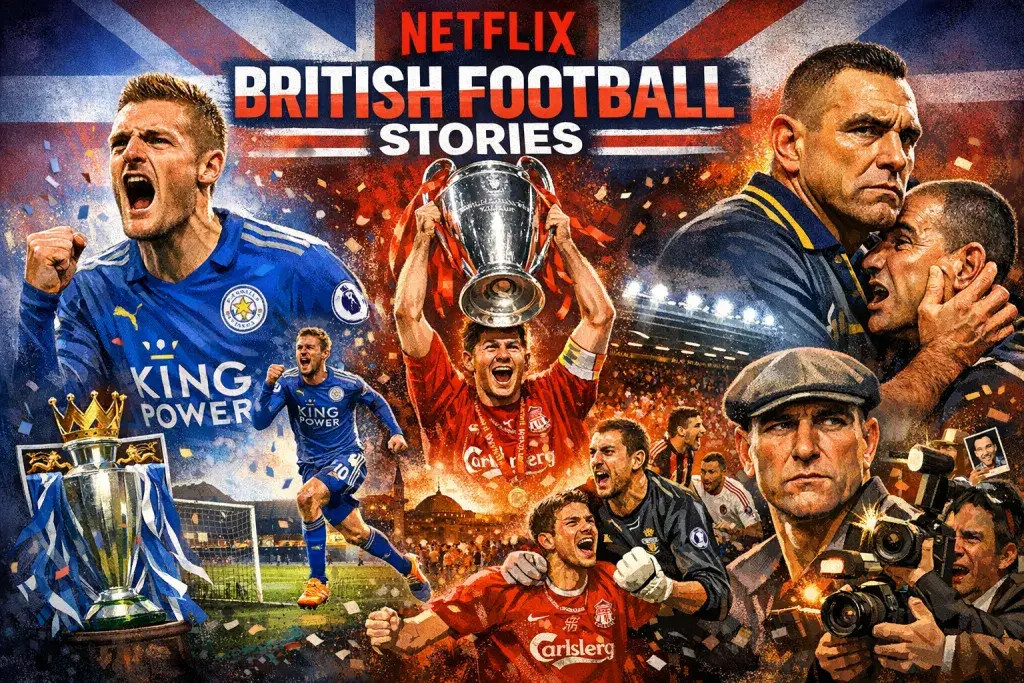
Netflix is extending its Untold documentary anthology into British territory for the first time, with a three-part series examining some of the most compelling personal and cultural stories the English game has produced. The films will debut across three consecutive Mondays beginning May 12, each focusing on a distinct era and personality: Jamie Vardy, Liverpool's 2005 Champions League final comeback, and Vinnie Jones. The move signals a deliberate push by the platform to deepen its hold on European audiences through localised, high-recognition content.
From Non-League Obscurity to a Title That Defied All Logic
The opening instalment, arriving May 12, centres on Jamie Vardy — a figure whose biography reads less like a career trajectory and more like a rebuke to the conventional structures of professional football. Vardy was working in a carbon fibre factory and playing part-time football in his early twenties, an age by which most elite professionals have already accumulated years of first-division experience. His eventual move to Leicester City for £1 million set a record fee for a non-league player, but it was what followed that permanently altered perceptions of late development in the sport.
Leicester's 2015–16 title was completed at odds of 5,000-to-1 — figures so improbable that bookmakers and analysts still cite the achievement as the most statistically unlikely outcome in English football history. Vardy's contribution was central: he finished as one of the division's top scorers and set a record for consecutive appearances in which he found the net. The documentary does not confine itself to the professional narrative. It also addresses the personal turbulence Vardy and his wife Rebekah attracted, including a long-running and widely publicised legal dispute that dominated British tabloid culture for years.
Revisiting the Most Dramatic Night in European Club Football
The second film, releasing May 19, returns to Istanbul on the night of May 25, 2005 — a date that has since acquired almost mythological status among European football followers. Liverpool entered the second half of the Champions League final against AC Milan facing a three-goal deficit. What followed across six minutes of relentless pressure was a complete reversal of apparent destiny: three goals, an equaliser, and ultimately a penalty victory. It remains one of the most-watched and most-referenced moments in the history of the competition.
Director Matthew Rudge has described the film as an attempt to present the definitive account of that evening, drawing on contributions from key figures including Steven Gerrard, Jamie Carragher, Xabi Alonso, and Dietmar Hamann — the latter having entered the contest at half-time and played a pivotal role in restructuring Liverpool's approach. What distinguishes this kind of retrospective documentary from earlier treatments is the passage of time: two decades on, participants speak with distance and reflection that was unavailable to journalists covering the event as news. The platform's ability to secure such figures for extended, candid interviews is part of what differentiates it from broadcaster-led archive productions.
Vinnie Jones and the Cultural Contradictions of Football's Hard-Man Era
The final instalment, due May 26, examines Vinnie Jones — a figure who occupies an unusual space in British cultural memory, simultaneously celebrated and condemned for the same qualities. As a central presence in Wimbledon's "Crazy Gang" of the late 1980s, Jones embodied a combative, physical style that belonged to a particular moment in English football before the Premier League's commercial transformation reshaped both the game's aesthetics and its image management.
The documentary focuses specifically on a controversial 1992 video compilation of Jones's most aggressive on-field conduct, which attracted significant media scrutiny and threatened to end his professional career at precisely the moment the Premier League was launching. That he survived the fallout — and subsequently built a recognisable acting career, appearing in Guy Ritchie's cult productions including Lock, Stock and Two Smoking Barrels — makes his trajectory genuinely unusual. The episode explores how a reputation built on controlled aggression translated into a screen persona that resonated with international audiences unfamiliar with his earlier notoriety.
What the Series Reflects About Documentary Culture and Streaming Strategy
The Untold franchise has, since its launch, pursued a consistent editorial instinct: locate stories that are broadly known by name but poorly understood in depth, then reconstruct them with access to principals who have previously declined to speak at length. The UK extension follows that logic, selecting three subjects — a journeyman turned national hero, a single extraordinary night, and a contradictory personality — that each carry genuine narrative tension beyond the surface-level facts.
For Netflix, the timing carries commercial logic as well. The release window in May 2025 positions the series ahead of a period of heightened public interest in football, with the FIFA World Cup scheduled for the following summer. Audiences primed by nostalgia and current enthusiasm are a receptive market for archival storytelling. The broader pattern across the industry suggests that streaming platforms have identified long-form sports documentary — particularly retrospective, character-driven work — as a reliable category for subscriber engagement, one that ages more gracefully than live rights and travels across borders with relative ease.